
Jesus taught his disciples to pray for daily bread. He invites us to live our daily lives prayerfully; trusting in and grateful for God’s provision.
Luke tells us about two rich men who meet Jesus.
First up, a rich ruler (Lk18:18-23) who calls Jesus ‘Teacher’ when asking about eternal life. He walks away sad. His money gets in the way. The price of discipleship is too high.
Next, Zacchaeus up in his tree. (Lk 19:1-10). He’s also rich but he hurries down to welcome Jesus to his home and salvation lands at his front door. The proof of his new life? Generous giving; financial integrity.
Is Jesus my Teacher or Lord?
You see, for the Rich Ruler, Jesus was a Teacher. But for Zacchaeus Jesus is Lord. There’s a world of difference. The Bible can and does teach us all sorts about living well with money. There’s biblical teaching on budgeting and borrowing, spending, saving, and giving.
But, we enter into generous discipleship when Jesus becomes Lord of our money, our possessions, our lives.
When we pray we can, like Solomon, seek wisdom in all things, including our financial decisions. But when we come into the presence of God in prayer it runs deeper than those money decisions. When we are in the presence of God, we open our hearts to let Jesus be Lord of all we have and hold. Prayer is a spiritual vagus nerve connecting our head, our hearts, our whole life.
From owners to givers
God’s people came home from Exile to a broken city, a shattered economy and a ruined Temple. The prophets Ezra and Haggai called God’s people to rebuild God’s house (Ezra 3; Haggai 1). It was a huge challenge. It needed their generous gifts of time, talents and treasure. But it was worth it. Haggai spoke words of promise from God: I am with you (1:13; 2:4). He offered a vision of God’s glory filling God’s house (2:7). And then this:
“the silver is mine and the gold is mine, declares the Lord Almighty”. (Haggai 2:8)
When we pray we acknowledge that God is the owner and the giver of all that we have. It’s no longer ‘my money’ to do with as I please. It’s God’s money entrusted to our stewardship. That is the all-important shift in generous discipleship. We don’t get there just by a decision we make in our heads, it’s a change of heart that is born of prayerfulness.
Worship, prayer and generosity
Thing is, when God’s people come together in worship and prayer, generous giving is never far behind. That should tell us something about rooting our stewardship programme in prayer. About connecting our worship and our stewardship.
In powerful stories, the Old Testament tells of how God dwells with his people, how God’s glory settles on God’s House. It tells of how the extravagant generosity of God’s people created a Tabernacle in the wilderness, built the first, glorious Temple in Jerusalem and restored the Temple after the Exile (Exodus 35:1-36:7; 1 Chronicles 29; Haggai 1).
In the great festivals of Israel’s faith, when God’s people swapped work for worship no one came empty handed. They brough their gifts; generous gifts in proportion to their blessings (Dt 16:17). Each year the people tithed what they had to provide for the priests who led the people in worship (Numbers 18:21-32, Nehemiah 10:35-38).
The point is this: the purpose of Giving in Grace is more than balancing the books or resourcing ministry. We can do that with a godly asking. The deeper purpose is a gentle and growing change in the money culture in our church. A change of tone in our money talk. We can only do that with a godly praying.
Fruit of the loom
Quarry Bank Mill near Manchester is fascinating, a window into the industrial revolution and into a hard past. Huge, noisy machines send a shuttle flying across the long warp threads, weaving in the weft threads which bind the fabric. Both warp and weft are needed.
In Giving in Grace, the financial data, the case statement, the literature we prepare: these are the warp threads and the structure of the programme. Our preaching and our prayer are the weft threads, and without them, it all falls apart.
So, make time to pray. Make use of our prayer resources and make prayer a priority in the planning group, in church and in personal prayer.
Check out the liturgical resources for prayer together in church, themed to the different bible passages in Design the Programme
There is a simple order of service for prayer in the planning group, in small groups or on the PCC
For personal prayer or in small groups see the selection of stewardship prayers (upload 8th April) - and curate your own.
Get creative. Think about how to encourage the congregation to pray about Giving in Grace. Think prayer groups and prayer triplets; prayer at the PCC and in house groups; prayer bookmarks or fridge magnets with a ‘theme prayer’.
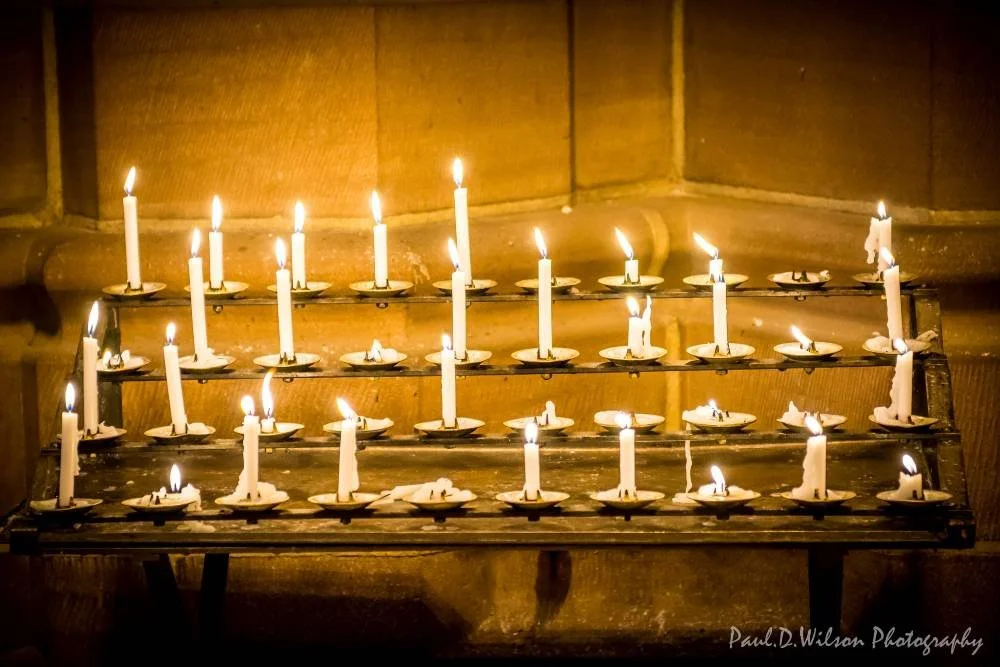
I am with you
Haggai challenged Israel to rebuild the Temple; to think big, get busy, give sacrificially. It only makes sense, is only possible because: ‘I am with you’. Prayer is how we hear the promise, know the presence, see the glory.