2 Corinthians Reflections: Completion and Equality
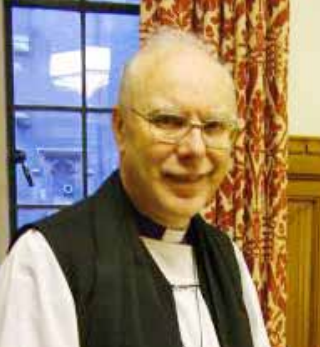
Written by Rt. Revd John Packer Honorary Assistant Bishop Diocese of Newcastle, 2 Corinthians 8:10-15
This must be the origin of the idea of the ‘completer/finisher’ (v.10), now seen as essential to the work of any team! Our lives and our churches are littered with examples of projects begun and never finished. So we need to ensure that our vision is realistic (v.11) and that we have the determination to see it through. This is often more a matter of clarity of purpose and determination than of finance. Paul suspects that the Corinthians have lost their initial impetus and gives advice (v.10) to help them to restore their commitment to completing the task.
Realism Rooted in Action
This will be helped by realism (v.12). There is a place in our lives for longing for a perfect world, but that needs to be firmly rooted in action to improve the present. This relates to the slogan to ‘think globally and act locally’. It may apply particularly to environmental issues. No church on its own can halt global warming. All of us have a responsibility to ensure that our own buildings and lifestyle enable us to walk gently on the earth.

Fair Balance and Equality
The phrase ‘fair balance’ (v.13, repeated in v.14) is more accurately translated as ‘equality’. Maybe the NRSV translators balked at so crude a phrase! Paul has no such inhibitions. Equality of provision is his aim. The idea that more-equal societies provide more fulfilment for richer and poorer alike has gained some political currency of late, though we shy away from the implications for policy. For Christians there is no doubt. Mutuality (vv.13–14) means that those with abundance must relieve those without. When this is understood, then that support of one another becomes part of the lifeblood of the church.
The Principle of Enough
This is exemplified by the story of the manna (Ex 16). However much or little the Israelites collected, they ended up with enough. We are dominated by the desire to have more, of food, comfort, possessions. We need to reflect on what is enough, and live our lives according to that principle. It is the antidote to materialism. It means we do not need continually to strive for more. It means that contentment which Paul so often commends (Phil. 4:12; 1 Tim. 6:8) – and the ability to contribute to the common good.

2 Corinthians 8:10-15
And here is my judgment about what is best for you in this matter. Last year you were the first not only to give but also to have the desire to do so. Now finish the work, so that your eager willingness to do it may be matched by your completion of it, according to your means. For if the willingness is there, the gift is acceptable according to what one has, not according to what one does not have. Our desire is not that others might be relieved while you are hard pressed, but that there might be equality. At the present time your plenty will supply what they need, so that in turn their plenty will supply what you need. The goal is equality, as it is written: “The one who gathered much did not have too much, and the one who gathered little did not have too little.
Reflect
What projects of your church now need a renewed vision to achieve completion?
Is mutuality yet part of your lifeblood or that of your church?
What would it mean for me to live according to a principle of ‘enough’?